Case study · AI pipeline
WebPulse: AI Website Redesigns
A pipeline that finds local businesses with outdated websites and rebuilds them as live, personalized preview pages, at roughly $8 per thousand leads.

Cold outreach that shows, not tells
A web design agency's best pitch is a finished redesign: send a prospect a link to their own site rebuilt, and the email sells itself. But doing that by hand means finding businesses with bad websites, judging each one, and mocking up a redesign. Hours per prospect, when cold email needs thousands of prospects.
The agency needed the whole chain automated: find the leads, judge the sites, build the previews, put them online, and deliver everything in a spreadsheet their team could work from.
Spend AI only where it earns its keep
The kit runs as twelve composable skills with one autopilot command that chains a full city run end to end. The client talks to it in plain English: "scrape pressure washers in Louisville" is a valid instruction.
The core design decision is cost discipline. AI handles only the judgment calls: vision models qualify sites and score photos. Everything mechanical is deterministic code that costs nothing: brand extraction, template filling, palette repainting, deployment. That's the difference between $8 and $40 per thousand leads.
Six stages, one command
- 01
Scrape
Apify pulls around 140 businesses per city from Google Maps, with rule-based pre-flags catching franchises, big brands, and businesses with no website at all before any money is spent judging them.
Apify · Google Maps · ~$0.50 per city - 02
Qualify
Playwright screenshots every site, then DOM signals plus a vision model sort leads into HOT, GOOD, BAD, and reference buckets. The same call extracts each site's brand colors and mood for later reuse, at about a tenth of a cent per lead.
Playwright · GPT-4.1-mini vision - 03
Extract assets
A free deterministic crawl collects each business's logo (with a styled text wordmark generated when none survives), hero candidates, and up to 200 real photos per lead from their website, Facebook, and Google Maps listing.
Cheerio crawl · $0 - 04
Build the preview
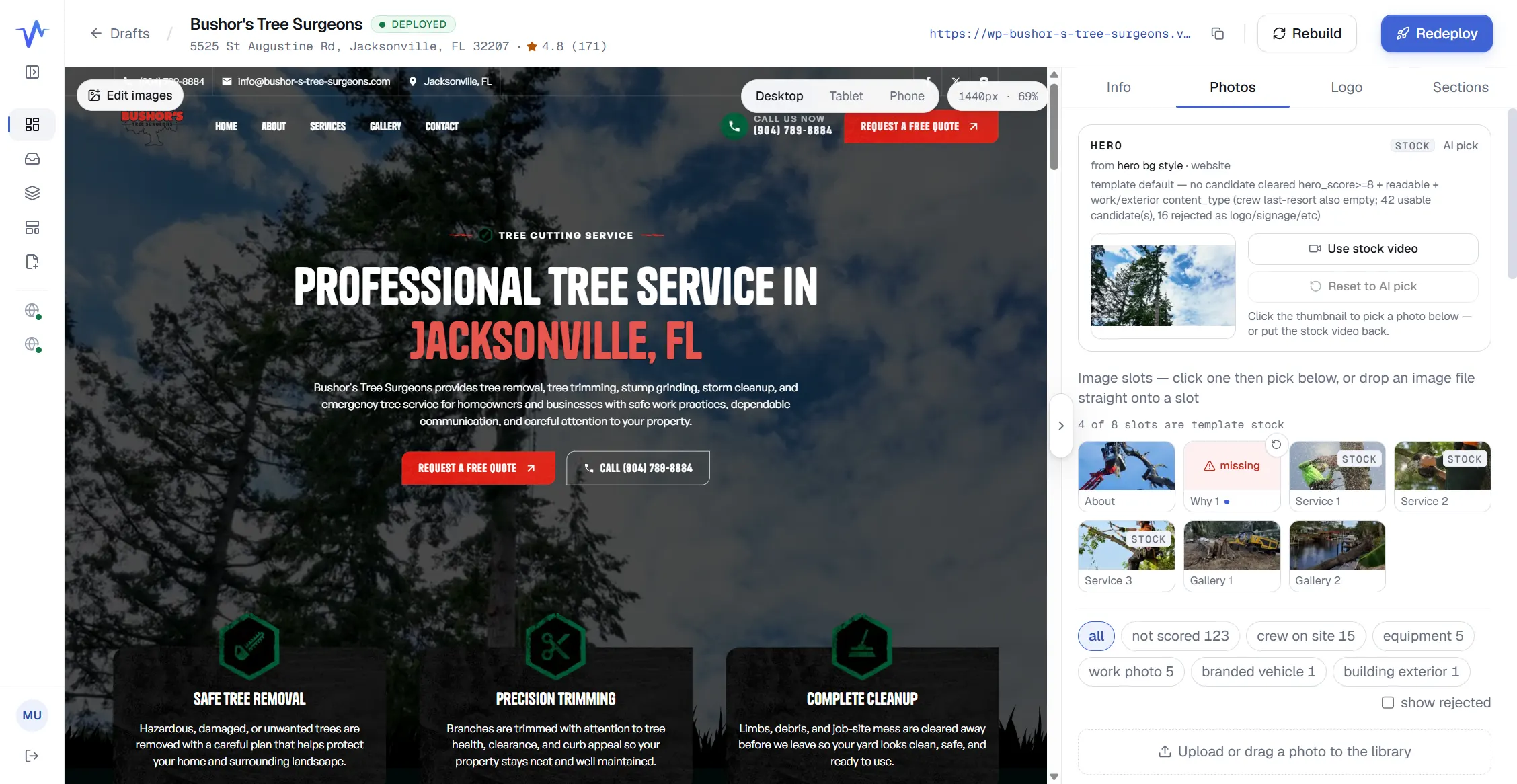
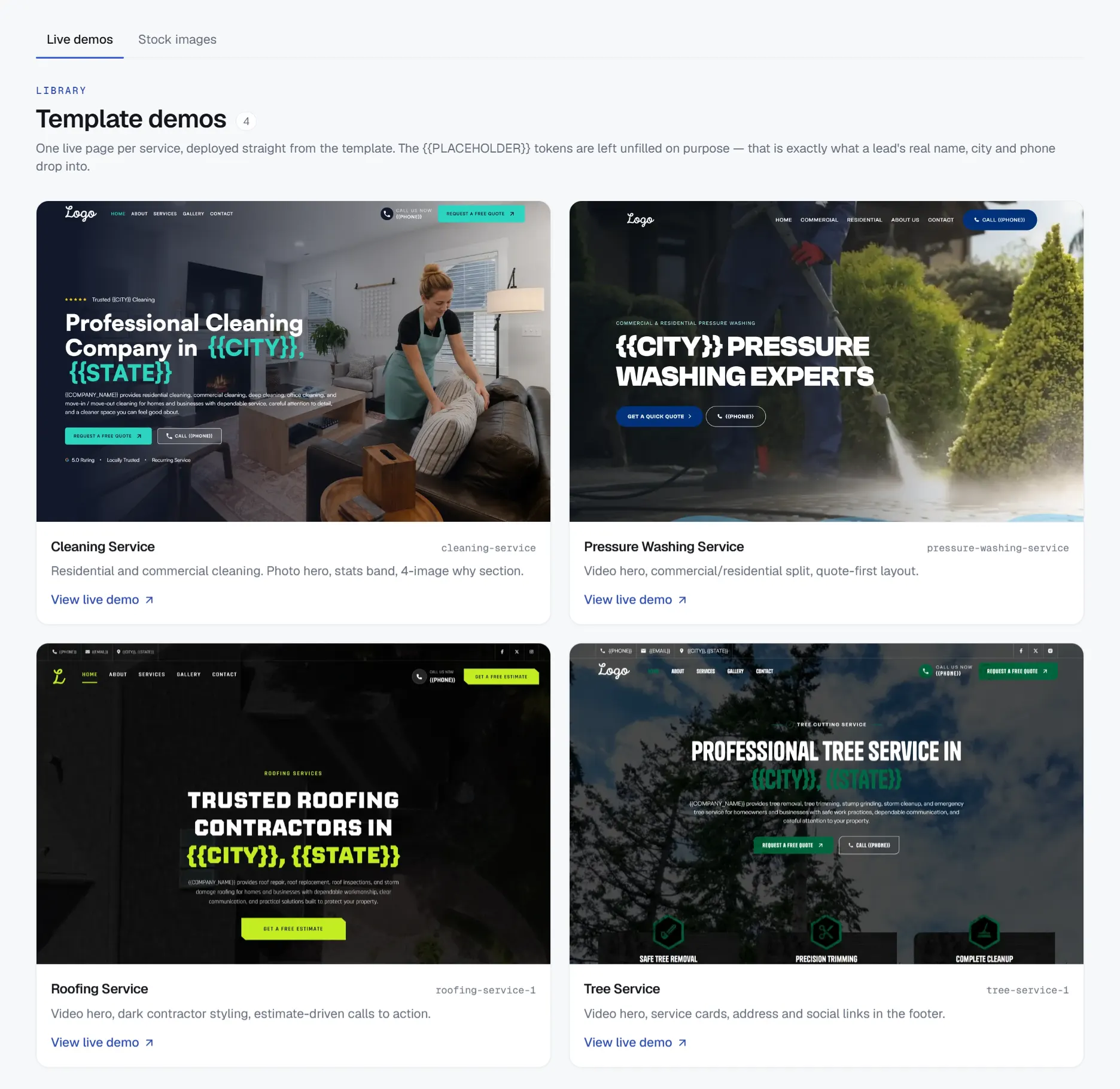
A polished niche template is filled per lead. An AI scorer picks the best real photos into the hero, about, and gallery slots (finished work first, crew shots last resort), and the whole template is repainted with the lead's actual brand palette. Their business, their photos, their colors.
Template fill · AI photo scoring - 05
Deploy
One Vercel project per niche, with every lead at its own route. New leads are file adds plus a single redeploy, so the system scales to thousands of previews without spawning a project per lead.
Vercel · 1 project per niche - 06
Deliver
Everything lands in the client's Google Sheet: qualified leads in tabbed buckets, live preview URLs, and optionally an AI-drafted outreach email per lead, ready to paste into their CRM and send.
Google Sheets · outreach drafts
The dashboard the agency runs it from
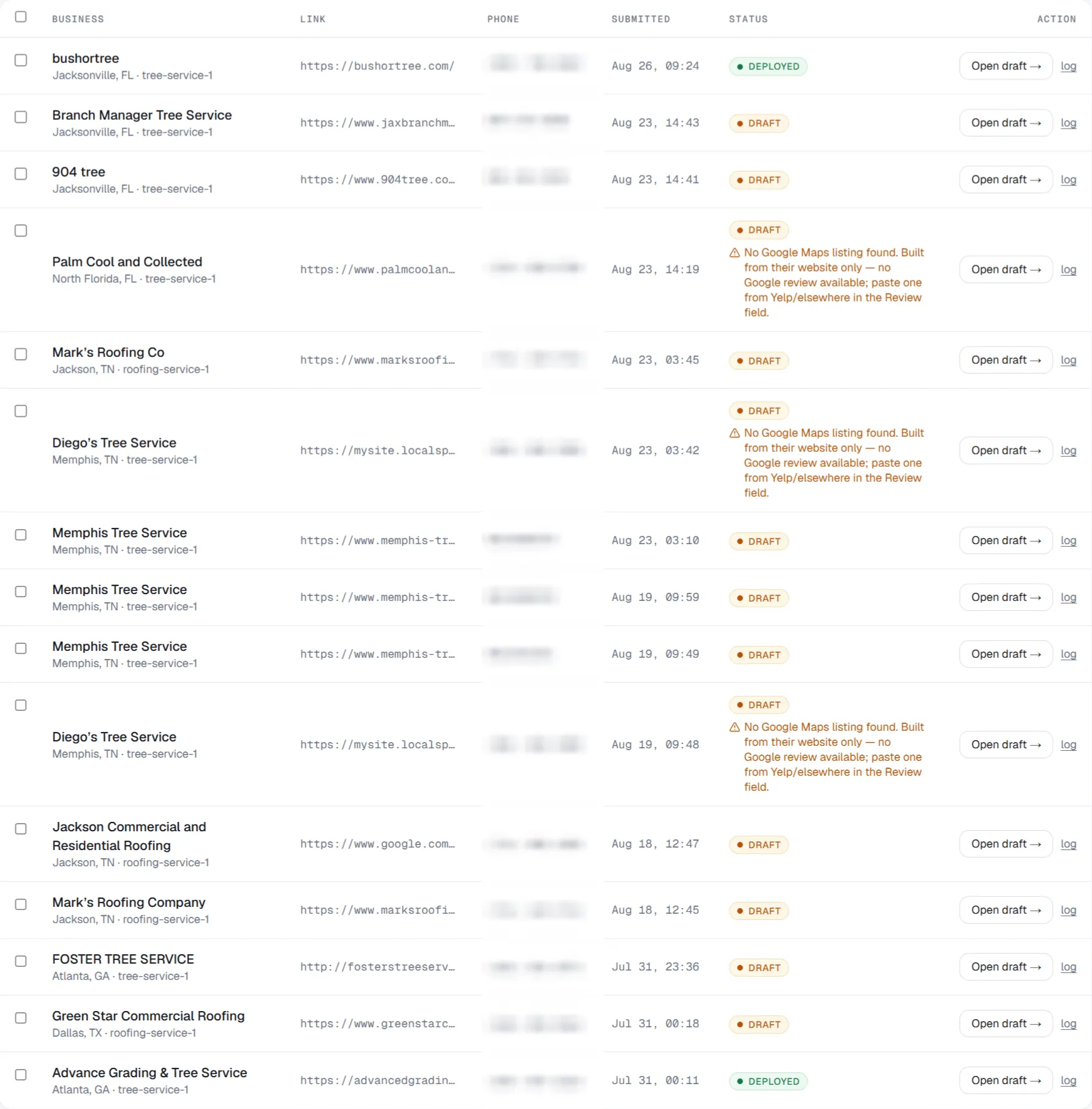
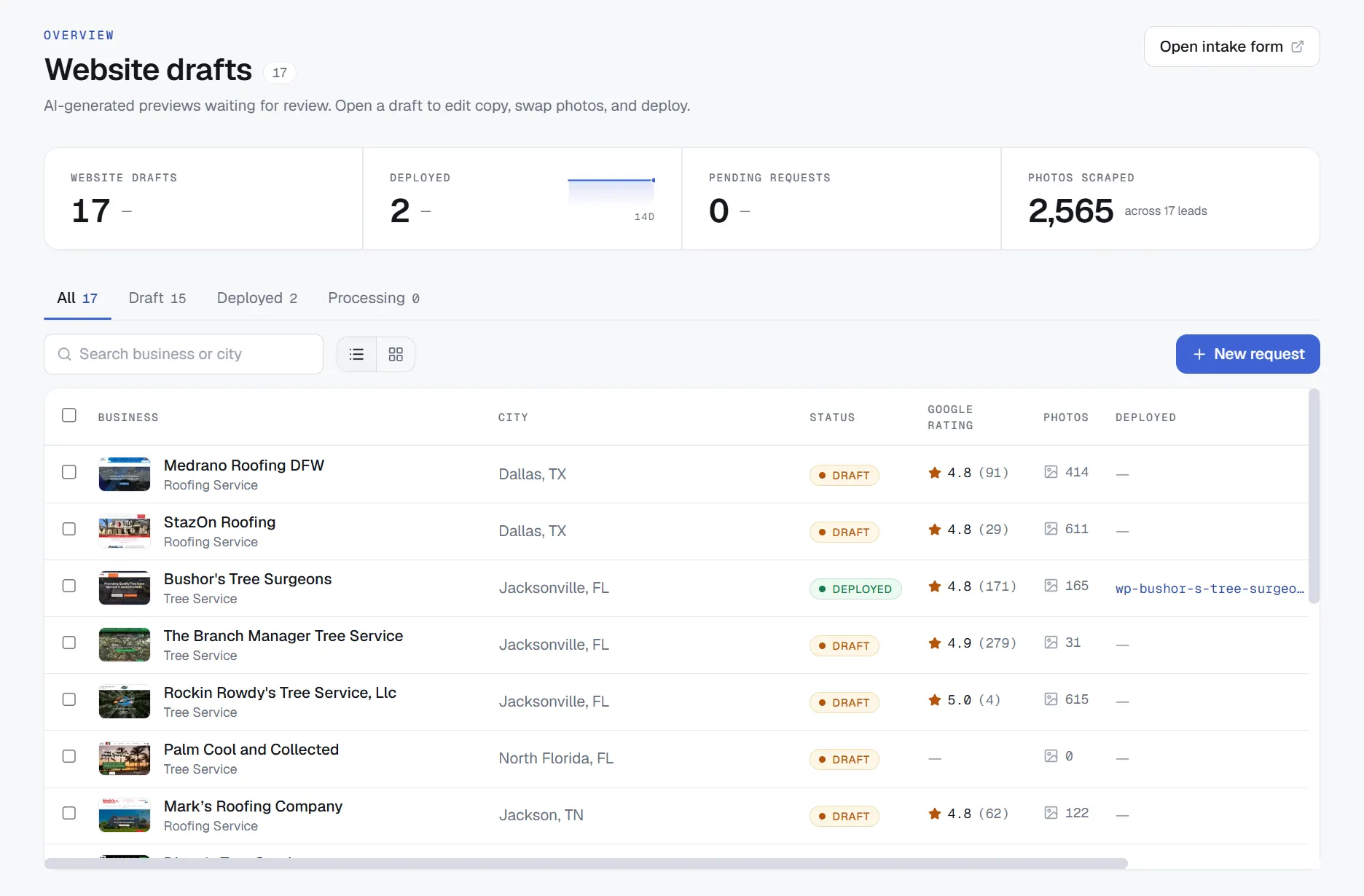
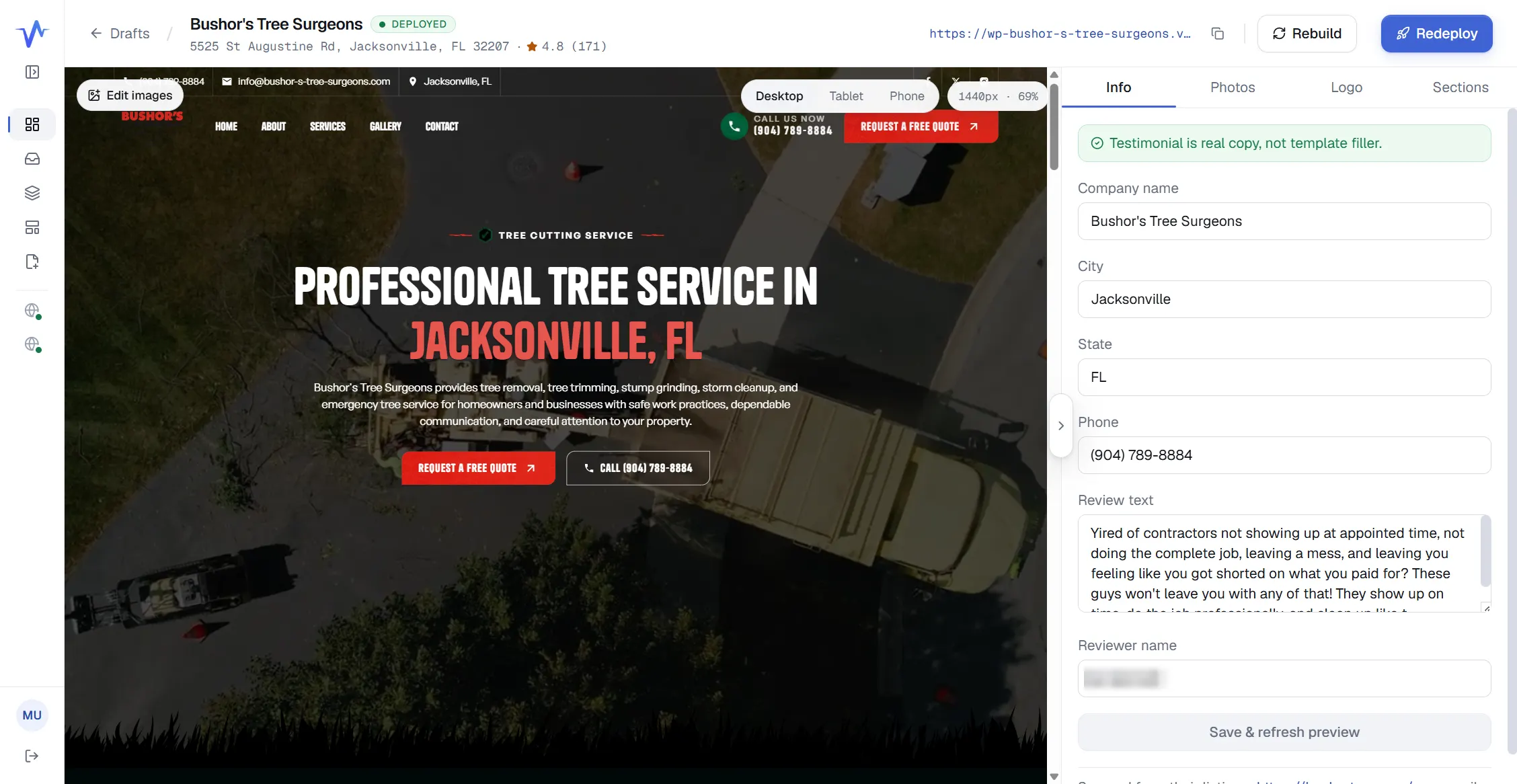
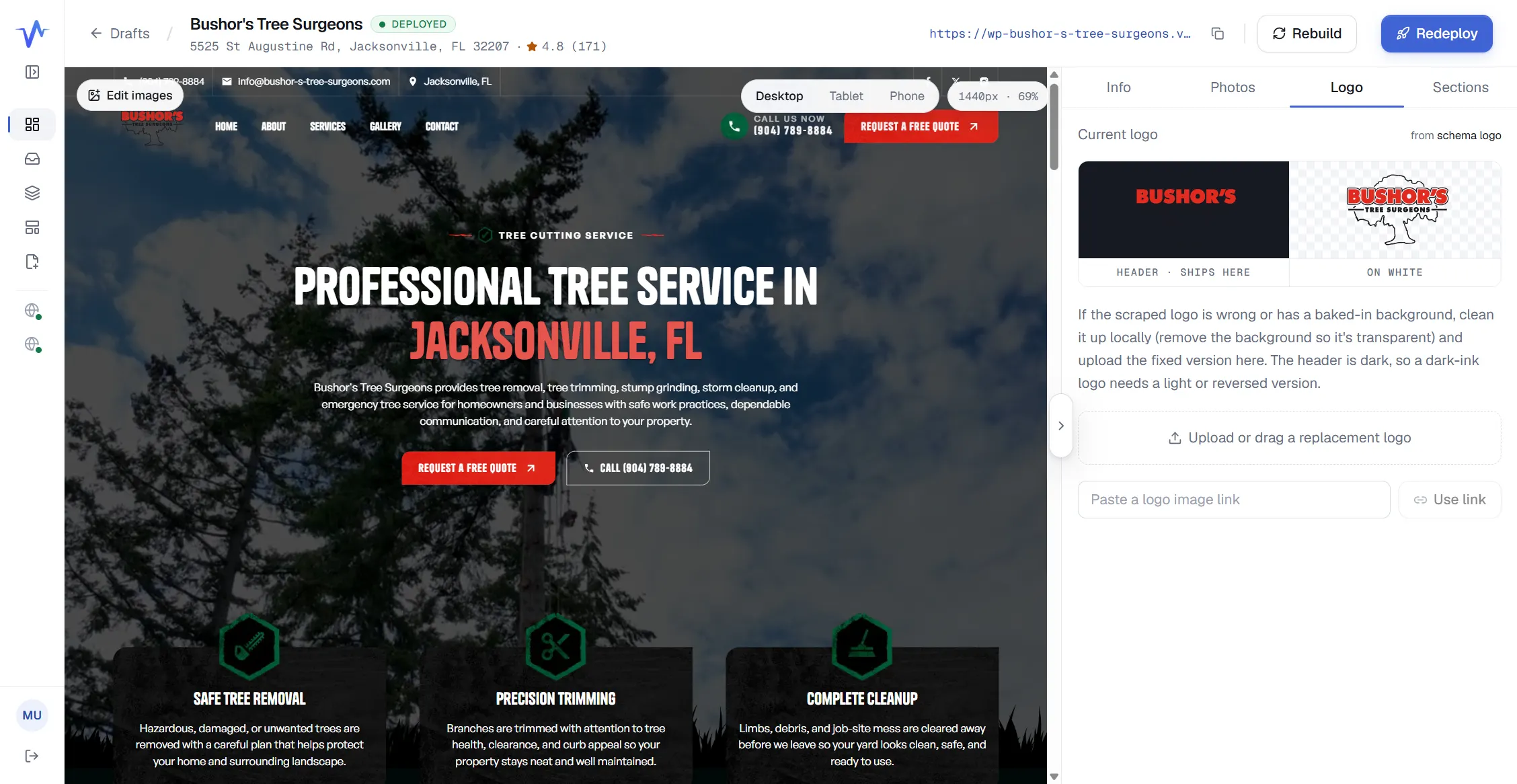
WebPulse Studio puts the pipeline behind a login. A business owner requests a free preview through a short form, and the agency reviews each AI-built draft, fixes its copy, photos and logo, and redeploys from one screen.
Use the arrows or swipe to move between screens, and tap or click any screen to see it full screen.

Agency-scale prospecting on autopilot
Full pipeline baseline, against a client quality budget of $30 per thousand.
Each stage runs standalone or chained by the one-command autopilot.
Every preview uses the lead's own name, photos, reviews, and brand colors. Nothing invented.
Want to see the output quality? The Web Projects page has a drag-to-compare slider showing a real business's old site against its WebPulse rebuild.
Available for remote work
Have a process an AI pipeline could run?
If your team does something repetitive at volume, there's probably a pipeline in it. Tell me about it and I'll sketch the stages.